Columbia University Libraries Acquires Papers of Barney Rosset, Founder of Grove Press
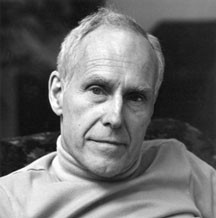
The Rosset Papers are a remarkable collection of correspondence, manuscripts, photographs, films, and other material that document a lifetime of creative work and publishing. The materials span more than 70 years, beginning with Rosset's school days in Chicago, and continuing up to the present day.
Rosset was born and raised in Chicago in 1922 and the archive traces his life from his teenage years. He attended the progressive Francis W. Parker School, where he formed a lasting friendship with future Academy Award winning cinematographer Haskell Wexler; their correspondence dates to 1943. While attending Swarthmore College and, after World War II, the New School for Social Research, his studies focused on world literature, film, and civil liberties—all topics that would engage him throughout his long career and all recorded here in the form of essays and other writings.
During the war, Rosset was stationed in China and served as a photographer in the Army Signal Corps. He made hundreds of unique images depicting daily life and wartime conditions in China, including many that document confrontations between Chinese and Japanese forces. Rosset's observations of what he saw are included in the nearly 200 letters he wrote home to his parents from the war.
After the war, one of Rosset's first projects was the film Strange Victory(1948), a documentary that assessed civil rights in the United States. The archive includes the complete production materials for the film. In 1949 he married the Abstract Expressionist painter Joan Mitchell and lived in the famous Quonset hut house formerly owned by the painter Robert Motherwell in East Hampton, L.I. The archive is rich in photographs from this period of Rosset's life.
While he remained interested in film, Rosset broadened his activities to publishing, and in 1951 bought, at Mitchell's suggestion, the then meager Grove Press, based in Greenwich Village. Under Rosset the press quickly made its reputation by publishing controversial titles by writers such as Samuel Beckett, William Burroughs, Jean Genet, Allen Ginsberg, Ernesto “Che” Guevara, Eugène Ionesco, LeRoi Jones, Jack Kerouac, D.H. Lawrence, Malcolm X, Harold Pinter, Henry Miller, Pablo Neruda, Kenzaburo Oe, Frank O'Hara, Alain Robbe-Grillet, and Tom Stoppard. Rosset's First Amendment battles brought Grove great notoriety—Allen Ginsberg called him "publisher-hero Barney Rosset"—and brought important European and World literature to American readers. Grove's literary magazine, the Evergreen Review, was launched in 1957 and ran until 1973; it still operates under Rosset's editorship as an online publication (http://evergreenreview.com).
Ross Posnock, Professor of English and Comparative Literature at Columbia, described Rosset as "one of the crucial figures in bringing American and European avant-garde writing to the larger public in the sixties and seventies… Publisher Barney Rosset, via Grove Press and Evergreen Review, made an indelible and compelling mark on modern letters. His archive will undoubtedly be a fascinating window on some of the great achievements in mid-century publishing."
The archive documents Rosset's personal life from his early days in Chicago, through his activities as a controversial filmmaker and publisher, and includes FBI and CIA files on Rosset, obtained via the Freedom of Information Act. Rosset continued his interest in politic and photography during a visit to Nicaragua, recording hundreds of images of their general election in February 1990. "Remembering Samuel Beckett," a chapter of Rosset's forthcoming autobiography, The Subject is Left-handed, appeared in Conjunctions 53 (Fall 2009) and was awarded a Pushcart Prize.