Columbia University Libraries Announces the Winners of the 2026 Bancroft Prizes
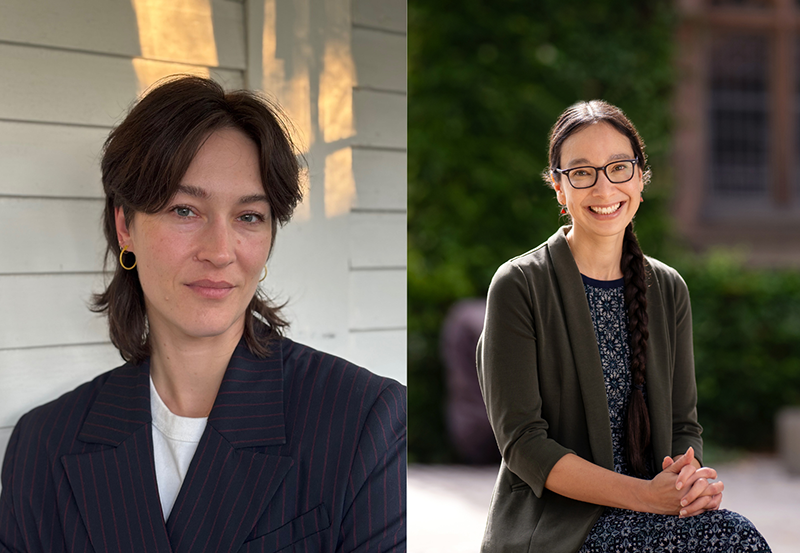
Columbia University Libraries has announced that two acclaimed works will be awarded the 2026 Bancroft Prizes in American History and Diplomacy: Vested Interests: Trusteeship and Native Dispossession in the United States by Emilie Connolly (Princeton University Press, 2025) and John Doe Chinaman: A Forgotten History of Chinese Life Under American Racial Law by Beth Lew-Williams (Belknap Press of Harvard University Press, 2025). Register to attend a public program in honor of the winners on April 23, 2026, at the Forum at Columbia University.
The Bancroft Prize, which includes an award of $10,000 to each author, is administered by Vice Provost and University Librarian Ann Thornton. The 2026 Bancroft Prize jury included three distinguished historians: Sarah E. Igo, Andrew Jackson Chair of American History, Professor of Law, Political Science, and Sociology, and Faculty Director of Dialogue Vanderbilt, Vanderbilt University; Ira Katznelson, Ruggles Professor of Political Science and History, Columbia University (Chair); and Sarah M.S. Pearsall, Professor of History, Johns Hopkins University.
The jury made the following statement about this year’s winning authors:
“Emilie Connolly’s Vested Interests fundamentally alters our understanding of trusteeship, the governing relationship between the U.S. federal state and Native nations across two centuries. Violence, bloodshed, and forced removal have typically taken center stage in this story. But Connolly reveals a quieter but no less devastating set of Native encounters with U.S. power. Bringing the history of capitalism to bear on Indigenous history - and vice versa - she charts the rise of a ‘fiduciary colonialism’ that led to the systematic expropriation of Native wealth over generations.”
“John Doe Chinaman gives a new face to the story of Chinese immigrants, exposing the vast scale of legal limitations they endured. In this timely, humane, and necessary book, Beth Lew-Williams digs under the stereotypes and limited records of all too many people dismissed with terms such as ‘John Doe Chinaman’ to excavate a rich and vibrant history of unnamed (and misnamed) Chinese men and women and their world in the 19th-century Pacific West. Reconstructing lives too often obscured by xenophobia, racism, and sheer indifference, Lew-Williams recounts the tales of many Chinese individuals and their survival in this dynamic, contested era.”
The Trustees of Columbia University award the Bancroft Prizes annually. The winners are judged in terms of scope, significance, depth of research, and richness of interpretation that they present in the areas of American history and diplomacy. In all, 246 books were submitted for consideration for the 2026 prize.
Emilie Connolly is Assistant Professor of History at Brandeis University. Her writing has received awards from the Society for Historians of American Foreign Relations and the American Society for Legal History, and her research has been supported by fellowships from the Institute for Advanced Study and the Dartmouth Society of Fellows. She was named a Distinguished Lecturer by the Organization of American Historians in 2024. This fall, she will join the faculty of Yale University as Assistant Professor of History. Vested Interests: Trusteeship and Native Dispossession in the United States is her first book.
Beth Lew-Williams is Professor of History and Director of Asian American Studies at Princeton University. She is the author of John Doe Chinaman: A Forgotten History of Chinese Life under American Racial Law (Belknap Press of Harvard University Press, 2025), which was supported by the National Endowment for the Humanities. Drawing on dozens of archives across the U.S. West, the book reveals the depth of anti-Chinese discrimination beyond federal exclusion and tells the stories of those who refused to accept a conditional place in American life. Her prizewinning first book, The Chinese Must Go: Violence, Exclusion, and the Making of the Alien in America (Harvard University Press, 2018), exposes the role of anti-Chinese violence in the making of U.S. border control.