Japanese Studies
The Japanese Collection at Columbia University, founded in 1927 by Dr. Ryusaku Tsunoda, has since developed into one of the outstanding Japanese collections in the country. Dr. Tsunoda envisioned that the collection of Japanese materials would help foster a sound relationship between the United States and Japan that would be based on accurate and ever-deepening knowledge. He succeeded in convincing a number of both American and Japanese friends of the importance of his undertaking. The first response from Japan was an initial gift of some 5,000 books from the Imperial Household as well as from groups of Japanese financiers, industrialists, statesmen, academics, and private citizens.
The Collection's strength lies in the humanities and the social sciences with substantial holdings in literature, history, philosophy and religion, especially Buddhism, fine and performing arts, business and economics, and East Asian studies. These resources are supported by a collection of secondary materials in Western languages.
The most up-to-date annual collection statistics is published in the February issue of the Journal of East Asian Libraries.
Japanese rare books collection has been gradually developed based on the initial 584 volumes of woodblock printed books donated by the Imperial Household in 1928, during Dr. Ryusaku Tsunoda's tenure at the library. Some 300 scrolls, both original and in reproduction, have been among the Library's treasures since then as well. In 2018, Sagabon Ise Monogatari was acquired in honor of Columbia’s distinguished Professor Donald Keene, a prominent Japanese literature scholar and steadfast supporter of the C.V. Starr East Asian Library, who passed away in February 2019. Other featured distinctive collections include:
Letters to Donald Keene from Japanese literary figures, 1952-2004
A collection of letters and manuscripts by twentieth-century Japanese authors, and first editions of Japanese literary publications, inscribed by the authors to Professor Donald Keene.Abe Kōbō collection, 1933-2002, (bulk 1950-1993)
Original books, pamphlets, journals, magazines, manuscripts, and ephemera produced, published and collected by Abe Kōbō. Also includes photocopied newspaper, magazine, and journal articles as well as book excerpts from Abe Kōbō's study.The Barbara Curtis Adachi Bunraku Collection, 1964-2003
This collection contains slides, photographs with corresponding contact sheets and negatives, audio and video materials, performance-related printed materials, realia objects and personal papers related to Bunraku collected by Barbara Curtis Adachi.The Makino Mamoru Collection on the History of East Asian Film
The Makino Collection (牧野コレクション) focuses on print materials mostly related to Japanese film that were collected over the course of fifty years by former documentary filmmaker and film researcher, Makino Mamoru.
The Library's collections primarily support the research of faculty and students in the Japanese studies programs at Columbia University, but the resources are available to, and well utilized by researchers in the greater New York area as well as scholars throughout the nation and Europe through Interlibrary Loan service.
a. Undergraduate
The Japanese Studies collection supports all faculty and undergraduate students with academic needs in Japanese Studies and East Asian Studies, but primarily at Columbia College (CC), General Studies (GS), and Barnard College (BC), with particular emphasis on those enrolled in the Department of East Asian Languages & Cultures (EALAC).
b. Graduate & Professional Schools
The Japanese Studies collection supports its primary constituents at the graduate students, faculty, and scholars associated with EALAC and the Weatherhead East Asian Institute (WEAI). EALAC’s program encompasses graduate students, faculty, and scholars both within the department and across related disciplines, including History, Political Science, Religion, and Art History, and the WEAI primarily focuses on social sciences such as Anthropology, Economics, Law, Political Science, and Sociology. However, graduate students, faculty, and scholars across from the campus, make use of the Japanese Studies collection for their academic needs.
c. Institutes, Interdisciplinary Programs, etc.
Associates of the following Japanese Studies Organizations at Columbia are also part of the East Asian Library’s major constituents:
Center for Buddhism and East Asian Religion (formerly the Columbia Center for Japanese Religion)
The Institute for Japanese Cultural Heritage Initiative (formerly the Institute for Medieval Japanese Studies)
d. Course Reserves
Selection of course reserve materials is up to individual faculty members. The Librarian will actively seek to acquire specific materials that are not currently in the collection.
a. Print
The Japanese publication market is still heavily focused on print. Columbia actively and largely collects print resources such as current monographs and serials, older titles regardless of their present print status, and reprint editions of primary resources, in humanities and social science related to broad Japanese Studies subjects with emphasis on: anthropology, archaeology, architecture, art and art history, economics, environmental issues, ethnic minorities and diaspora communities, folklore, film studies, history from ancient times to more recent decades, history of science and technology, human ecology, international relations, Japanese language pedagogy and linguistics, music, performing arts, religion, popular culture, law and society, library history, literature, politics and government, regional studies, religion, social history, sociology, and women’s studies.
In addition to these core areas, the collection actively monitors and incorporates emerging research trends in Japanese Studies as well as technologies to assist the usage of the Collection. This includes scholarship in digital humanities, environmental humanities, gender and sexuality studies, contemporary media and popular culture, postcolonial studies, and interdisciplinary approaches integrating science and technology with the humanities and social sciences.
Pure science and engineering are not collected.
School textbooks are generally not collected unless they hold significance for pedagogy research or serve as primary sources.
Translation works are only selectively collected for researches on intellectual and cultural exchange, Translation Studies, influence on Japanese thought and scholarship, Comparative Literature and Linguistics, historical documentation of globalization, publishing and literary trends, and primary sources for interdisciplinary research.
b. Digital Collections
Columbia University Libraries offers a wide variety of electronic resources. Japanese electronic resources relevant to the field are acquired as they become available. Currently, we acquire and subscribe to archival collections, reference and index databases, e-books, and e-journals mainly. Some resources are subscribed via library consortiums or national level collaborations. New acquisitions of databases on physical media such as DVD-ROM and USB would be avoided as much as possible and the Japanese Studies Librarian will first discuss the issues with publishers and vendors.
c. Media
The Japanese Studies collection actively develops its media collection in DVD and Blu-ray formats including feature and documentary films produced mainly in Japan. Streaming services for overseas academic libraries are not yet seen from Japan.
Currently, microform titles are acquired very selectively mainly due to the mutual agreements with other libraries to preserve important periodical titles.
d. Languages Collected
The Japanese Studies Librarian is primarily responsible for Japanese-language acquisitions, but cooperates with other librarians especially those at C.V. Starr East Asian Library for relevant materials in other languages.
e. Chronological Focus
Comprehensive. All chronological periods are collected.
f. Geographical Focus
All geographic areas in Japan are collected.
Other parts of the world such as the United States, China, and Korea are collected selectively.
g. Imprint Dates Collected
We collect current and recent imprints expensively and earlier imprints selectively. When items are requested by faculty and students, the date of the publications is not a factor for consideration. When rare books and special collections are acquired via gift or purchase, no specific chronological ranges are established in advance.
Rare materials, including physical artifacts, are acquired primarily for their research value and content rather than for their aesthetic or collectible appeal. While the library accepts such materials, it does not actively purchase them for their rarity alone. Any rare books, artifacts, or archival materials acquired are selected based on their relevance to Japanese Studies and East Asian scholarship. Although rare and special materials are occasionally added to the collection, there is no dedicated budget for their active acquisition. Japanese rare books are rarely purchased at auction, as this approach does not align with the library’s acquisition policies and practices. The purchase of costly special collections from the market or private owners is typically facilitated through support and/or requests from academic departments, particularly the Department of East Asian Languages and Cultures and the Weatherhead East Asian Institute.
a. Consortia and Collaborative Collecting with Other Institutions
Besides Libraries’ participation in Borrow Direct, Interlibrary Loan, the Manhattan Research Library Initiative (MaRLI), the library collaborates with the following partners:
Coordination and collaboration with Princeton University Library: Primarily focused on securing expensive and large multi-volume sets through ReCAP.
IvyPlus Japanese Studies Librarians Group: Currently, there are two informal collaborations among IvyPlus Japanese Studies librarians on the East Coast:
The Local History Project: Columbia is mainly responsible for Niigata (15) – Aichi (23).
The Newspaper Back Files Project: Columbia acquired back numbers of Mainichi Shinbun.
North American Coordinating Council on Japanese Library Resources (NCC): Columbia has acquired several multi-volume sets through their MVS grant program and subscribes to databases via national group deals coordinated by the Council.
b. Selection for ReCAP
Due to space limitations and conditions in C.V. Starr East Asian Library, roughly fifty percent of the collection is sent to and stored in ReCAP according to quota instruction. The titles are carefully chosen for ReCAP by the Japanese Studies Librarian. The goal is to send lesser-used titles off site and to keep heavily used titles directly related to the Japanese Studies programs across campus on site. Books which have not been circulated for the past ten years and Serials older than the current year are also sent off site. Additionally, most newly acquired multi-volume sets as well as newly acquired Japanese novels, essays, and poems are sent directly to off-site storage. Furthermore, most non-book formats such as DVDs and microforms are also located off site following the Libraries’ policy. Newly acquired Special Collections will be sent to ReCAP for better preservation purpose.
c. Deaccessioning
Titles are deaccessioned only in cases where the physical copy is lost or no longer serviceable in paper or other format, or it is determined that a duplicate copy is unnecessary. Processed materials located in the Rare Book Room in the East Asian Library are never deaccessioned.
d. Digitization and Preservation
Only a relatively small number of rare books and special collections from the Collection have been digitized. The digitization is often driven by the orders requested by users. Digitized files are often hosted by and made accessible through the Digital Library Collections and/or Internet Archive. Due to their physical condition, on-site access to the already digitized rare books and special collections may be limited for scholars and researchers.
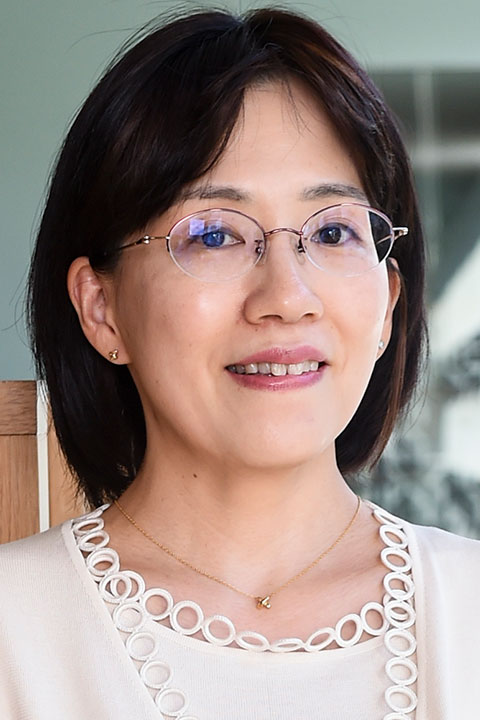
Chiaki Sakai
Japanese Studies Librarian
- Starr East Asian Library