Website Preservation
General Records Guidelines | Record Packing Tips | Training Slides | Services & Vendors
Managing eFiles | Website Preservation | Transferring Digital Records
Website Preservation
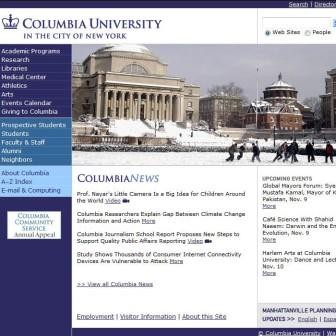 Columbia website, 2009.
Websites are university records, and as such, the University Archives is committed to the capture and continued access of the University’s entire web domain. The Columbia University Libraries have been capturing Columbia websites via the Archive-It service since June 2010.
- Guidelines for Preservable Websites: These guidelines not only help with our web archiving efforts but will also make it easier for search engines to find and index your site.
- All sites with a columbia.edu web address are included in our routinely scheduled web crawls.
Do you maintain Columbia content in a web domain outside of columbia.edu?
Are you retiring a website either as part of a redesign/relaunch effort or at the end of a project or initiative?
Contact uarchives@columbia.edu so we can make sure to capture your site for the archive.
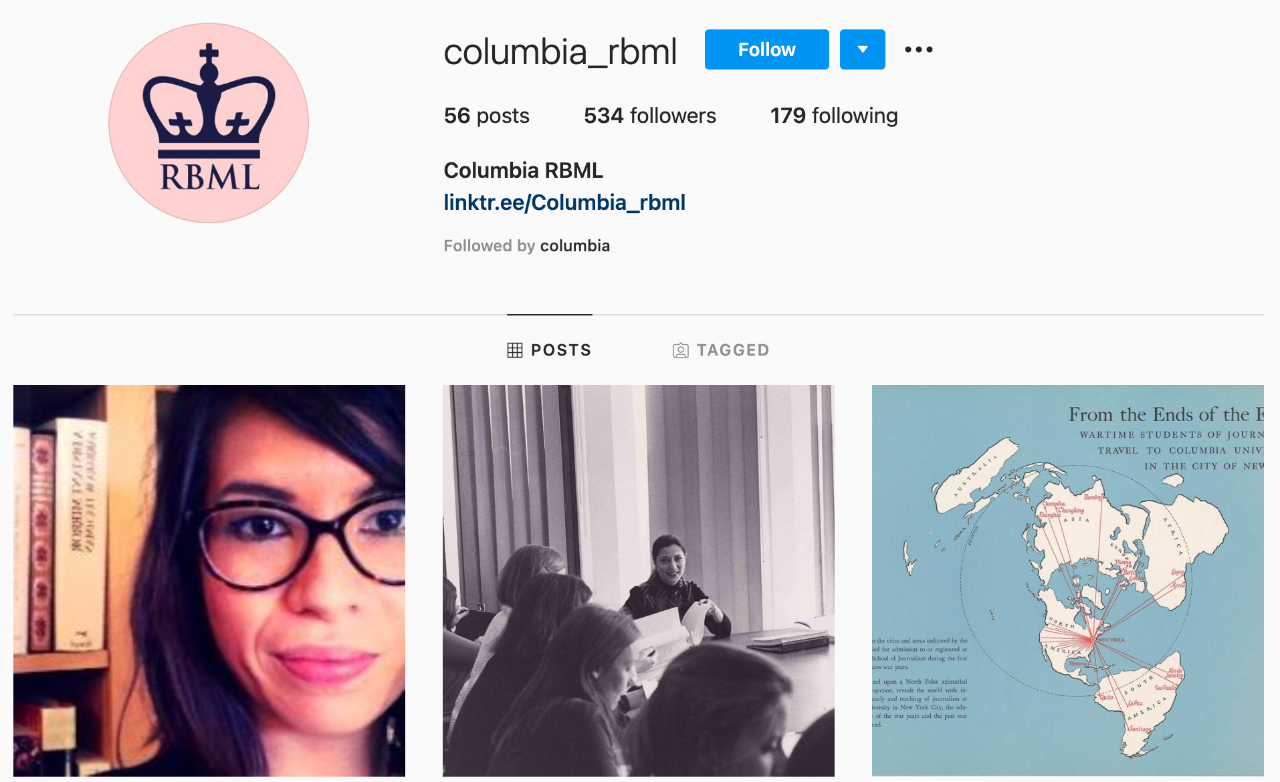 RBML Instagram (@columbia_rbml), March 2021
How do you capture dynamic social media content that is constantly changing on platforms that require users to log in to access content?
Archiving social media has always been imperfect. So far, the best approach is to manually archive the desired social media feeds directly as a logged-in user of the respective platforms. This way, the look and feel of the platform is fully accessible.
The Chrome extension Archiveweb.page is a manual approach to web archiving, created by developer, Ilya Kremer. To use this tool:
- Add the Archiveweb.page extension to your Chrome browser.
- Once logged into Twitter, FB, Instagram, etc., go to the feed you wish to archive, and use the extension to archive exactly what you want by clicking on each relevant page/link in your browser.
- These captures can be stored as collections on the browser's device and can also be downloaded as .wacz or, preferably, .warc files, which can be uploaded into our University Archives web collection.
For more information, please see our guidelines on how to transfer digital records.
Archiving Social Media