Early History

When Samuel Johnson helped found King’s College in 1754, the term “alma mater” must have been well known to him. The first president of the university liked the concept of a nourishing mother of studies so much that he incorporated it into the school’s original seal, which he designed. Johnson gave Alma Mater a human form in his design for the seal. In the minutes of their 1755 meeting, the Trustees described Johnson’s seal in detail:
The College is represented by a Lady sitting in a Throne or Chair of State, with several children at her knees to represent the Pupils…One of them She takes by the hand with her left hand expressing her benevolent design of Conducting them to True Wisdom and Virtue…Out of her Mouth over her left Shoulder, goes a label with these words in Hebrew Letters - God is my Light…
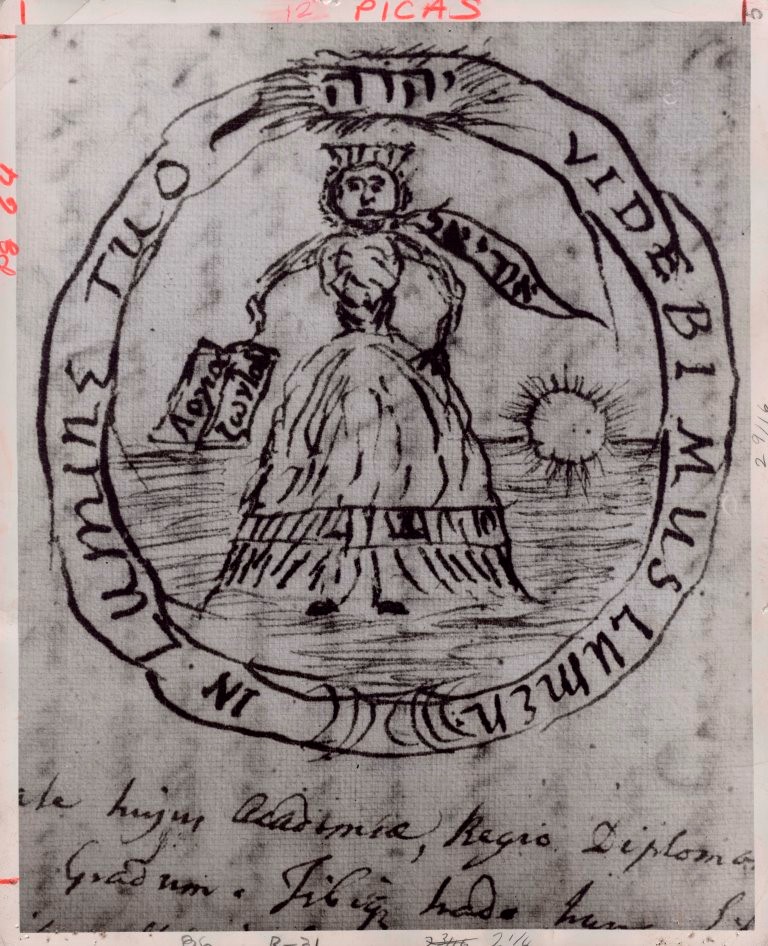
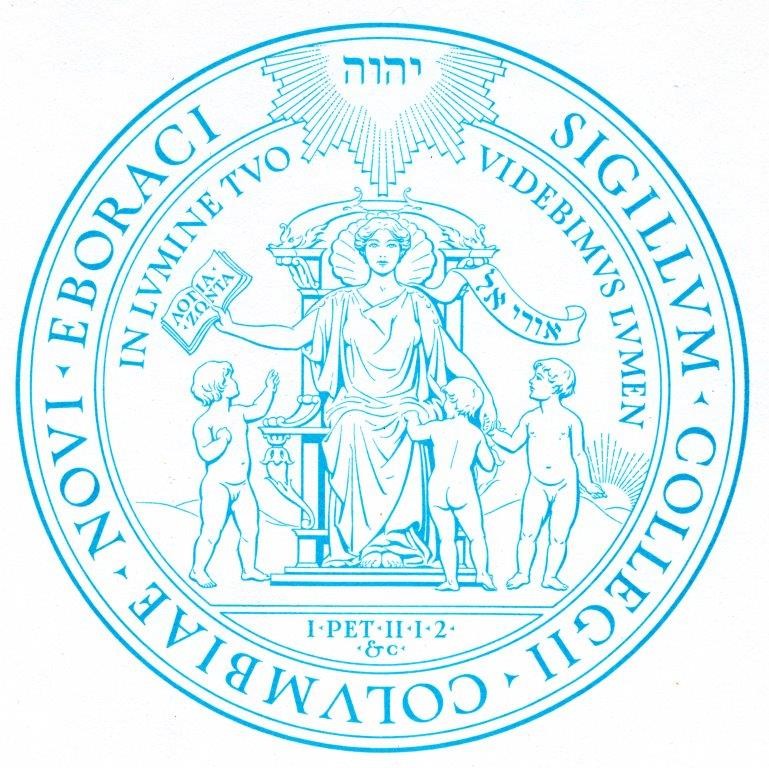
Johnson’s depiction of Alma Mater reflected common eighteenth century ideals about womanhood, and motherhood in particular. As the century progressed colonials, and later, Americans, envisioned a new role for white women. “Republican Mothers” performed an essential civic duty for their country by nurturing and educating virtuous young sons who would become the future political and academic leaders of the colonies (and, later, the young country). Johnson’s seal reflected this eighteenth-century reverence of mothers’ fundamental educative power.
This image of Alma Mater continued to resonate after the Revolution when the college reopened in 1784; the seal remained exactly the same except for the replacement of “King’s College” with its new name, “Columbia College.”
- [Image 1] Original drawing of King's College Seal. (Scan 1795) Historical Photograph Collection, University Archives, Rare Book & Manuscript Library, Columbia University in the City of New York.
- [Image 2] Columbia University Seal. (Scan 592) Historical Subject Files, University Archives, Rare Book & Manuscript Library, Columbia University in the City of New York.