Preservation
Established in 1974 with responsibility for preserving Columbia University Libraries’ collections in all formats and genres, the Preservation Division is one of the five oldest library preservation programs in the United States. Preservation's primary responsibility is to maintain the collections through treatment, which ensures their availability for use, and through digitization, when use is no longer possible due to unstable condition and/or embrittled paper. The division is responsible for preservation of materials in all formats and genres, including digital resources created by the Libraries. The division also manages projects to digitize library holdings for access purposes.
The division provides preventive preservation measures through disaster preparedness planning, environmental monitoring, environmental control, planning for library renovation, deacidification, and staff and user education and training.

Emily Holmes

Brianna Gormly
Assistant Director, Preservation, Reformatting, and Metadata

Alexis L. Hagadorn
Janina F. Marquordt-Pascual
Preservation Processing Librarian
The Binding and Shelf Preparation Unit (BSP) is a physical processing unit within Preservation. BSP prepares new library materials for the shelves, long-term storage, and patron use by adding spine labels, security tape, and ownership stamps. BSP also manages the binding of select materials, including serials and monographs, through a commercial bindery in accordance with the Library Binding Standard ANSI/NISO Z39.78-2000 (rev. 2010).
Beyond preparing new materials, BSP also supports the care of existing collections. This includes assessing and triaging damaged circulating materials, managing rebinds, and working on annual deacidification projects to protect at-risk paper collections. Further, items cannot be bound commercially, BSP collaborates with other Preservation units, referring them to Conservation for in-house treatment or to the Preservation Reformatting Unit (PRD) for reformatting.
The Columbia University Libraries Conservation Program is responsible for the care of the Libraries’ material collections, including exhibit and loan preparation, monitoring of building environments, full conservation treatment of library and archival materials, coordinating the conservation of items such as paintings, decorative arts, and ethnographic objects, and coordinating the disaster response program.
The General Collections Repair Unit
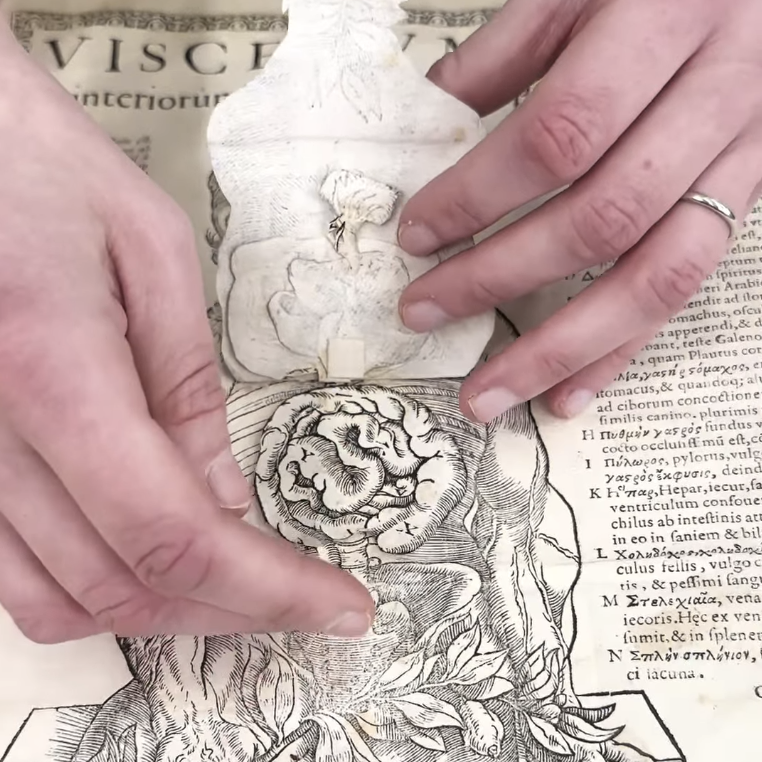
The General Collections Repair Unit carries out repairs on circulating and reference materials that must be retained in hard copy because of age, format, or historical significance. Common repairs include mending torn pages, tipping in loose leaves and errata slips, reinforcing or replacing damaged covers, and re-sewing books together by hand. Brittle maps and charts, and heavily-used oversize materials may be encapsulated in a polyester film to protect them from damage during handling by researchers.
Damaged general collections materials may also be sent for commercial rebinding through the Binding and Shelf Preparation Department, or for reformatting through the Preservation Reformatting Department.
The Rare and Special Materials Conservation Unit
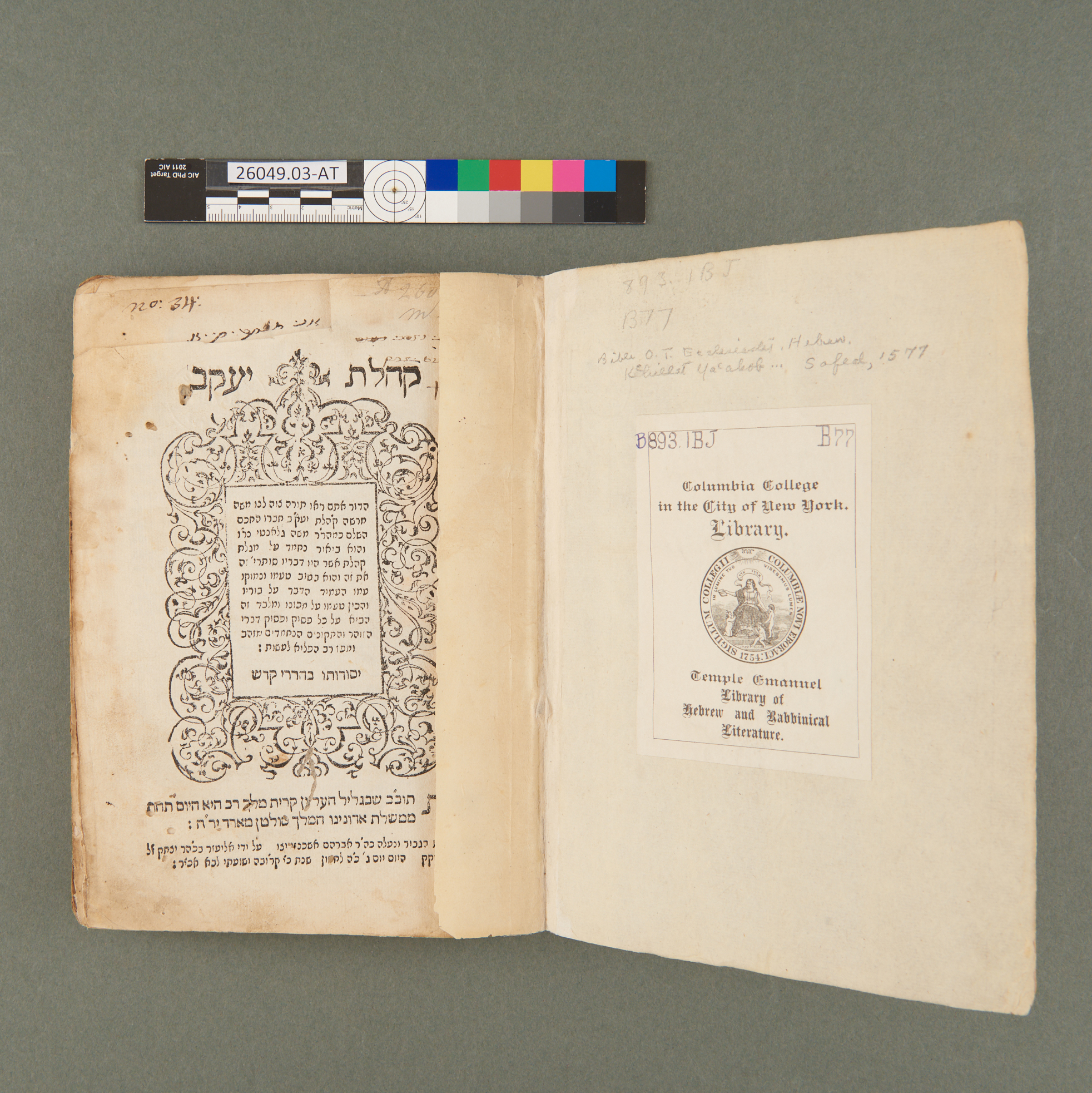
The Rare and Special Materials Conservation Unit treats and stabilizes a wide range of the Library's most rare and valuable artifacts, including bound and unbound manuscripts, printed books, works of art on paper, architectural drawings and other objects such as large Thai shadow puppets made from rawhide and bamboo. Working together with the special collections curators, the conservators assess the conservation needs of the various collections, and contribute to both long- and short-range preservation planning. Conservators also assist in preparing rare materials for exhibition and loan, coordinating disaster preparedness and recovery activities, and monitoring environmental conditions throughout the libraries.
When necessary, conservators also prepare items so that they can be safely digitized, and help to protect them during imaging.
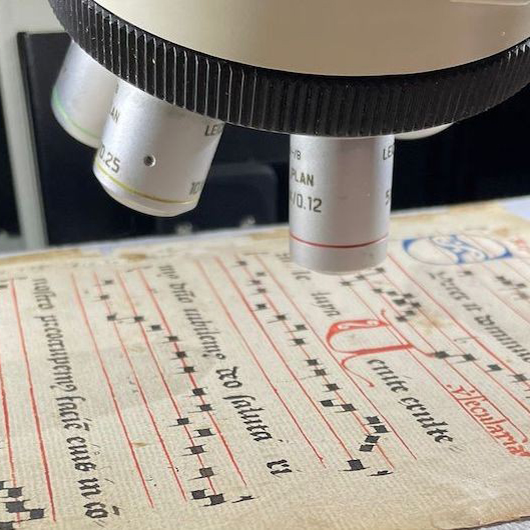
The Digital Imaging Lab creates digital surrogates of the cultural heritage materials held by the Columbia University Libraries for the purposes of both preservation and access. The digitization of these materials is consistent with the practices defined in the Federal Agencies Digitization Guidelines Initiative. Our capture parameters and performance expectations (resolution, grey balance, tonal and color accuracy) for the various workstations are informed by these guidelines. Post capture staff review and create Optimized Master files for long term preservation and as the basis of derivative files for multiple end users. The Optimized Master file has all editing (cropping, color, deskew,) performed in the RAW conversion process to a 16 bit file conforming to the tiff 6.0 specification. The file is embedded with the AdobeRGB color space. Technical metadata is embedded into the tiff headers.
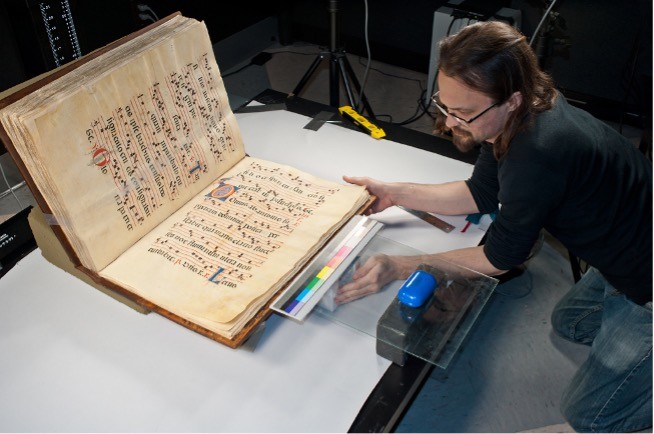
Patron Orders
The Digital Imaging Lab provides patrons with digital reproductions of cultural heritage items held by The Columbia University Libraries for personal or scholarly use. The usual turnaround time for these orders is six weeks. For policies regarding patron orders or to place a patron order, please see Digitization Services.
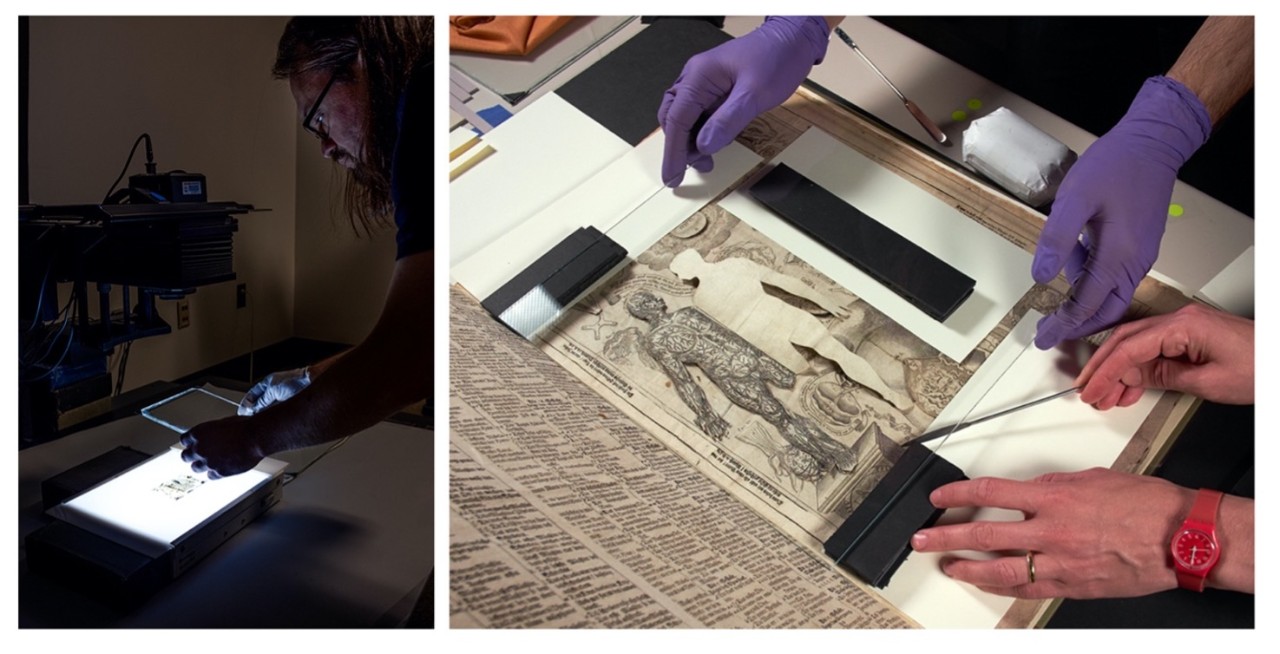
Digital Projects
These are larger scale projects, sometimes with external funding which involve the digitization of a particular collection, in whole or in part for the purposes of research, teaching, and learning. The Digital Imaging Lab works closely with all stakeholders of the project to come up with appropriate timelines, imaging technologies, handling guidelines and project deliverables.
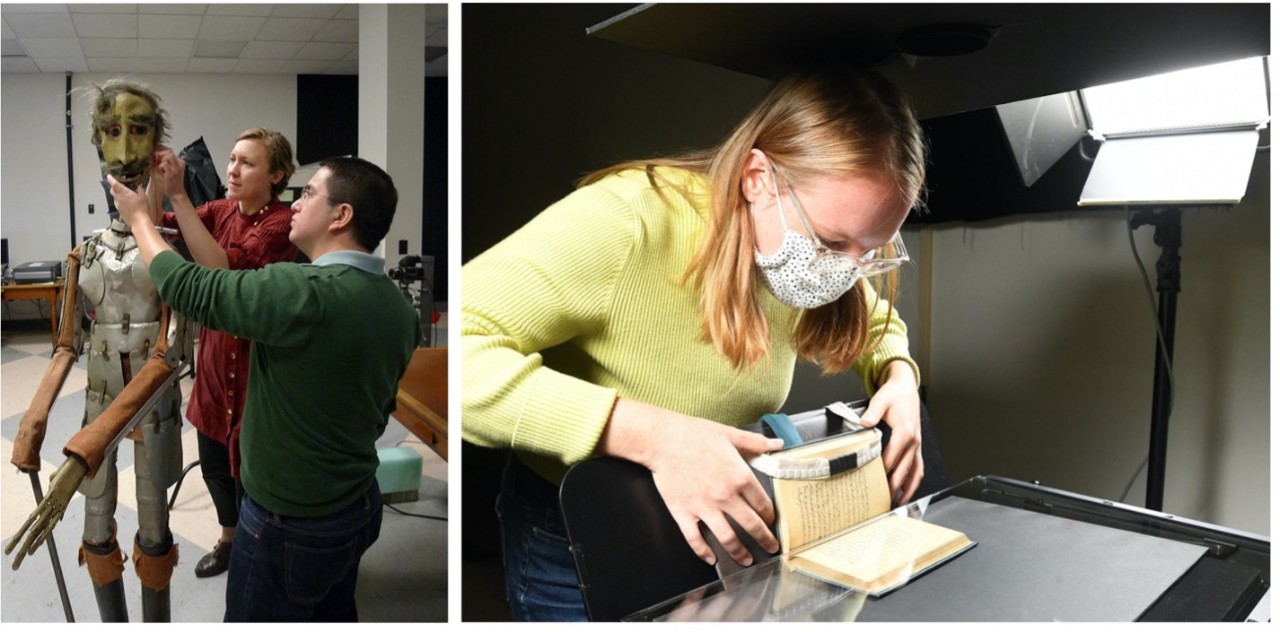
Work Stations
The Digital Imaging Lab has several workstations to accommodate a variety of cultural heritage materials and the various workflows. Because we digitize a great many bound books and manuscripts, each workstation is equipped with a Linhof book cradle to protect bindings that could be at risk of damage. Mac computers and Eizo monitors are also standard accessories for each imaging workstation.
- PhaseOne iXH 150MP camera with PhaseOne 72mm Mk II lens on a DT Titan 40” x 60” copystand with Profoto strobes
- PhaseOne iXG 100MP camera with a PhaseOne 72mm Mk II lens on a DT 30” x 40” copystand with Profoto D2 monolights
- Nikon Z8 35mm mirrorless camera on Manfroto studio stand with Profoto D1 monolights
- Nikon D850 (converted to full spectrum) with custom built UV lights and Dedo IR (850/960) lights
The Preservation Reformatting Department (PRD) supports current and future access to Libraries materials through their conversion to another format (typically digital). Material is selected for reformatting based on a digitization project proposal process, patron requests, and/or deterioration risk of the materials.
Digitization Projects
PRD manages digitization projects from distinctive collections across the libraries, working with both the in-house Digital Imaging Lab and outside vendors. PRD is responsible for activities such as preparing materials for digitization and processing files for ebook collections. Digitized materials are discoverable on the Digital Libraries Collections and on Internet Archive.
Patron Reformatting Requests
PRD facilitates patron requests for publication quality reproductions of items owned by the Columbia University Libraries. Digitization and copying services include: Audio/Video Reformatting, Digitization/Photography, Electronic Books, and Microfilm Duplication and Scanning. For more information, see Digitization Services.
Brittle Books Reformatting
From the early 1800s, paper was increasingly manufactured using acidic wood pulp. The acids contained within the cellulose fibers gradually break down the paper. With sufficient time, especially in conditions of high humidity, high temperature, and polluted air, the paper becomes so brittle that it breaks when folded.
The Preservation Division has long had a commitment to reformatting library materials on embrittled paper. Over the years, these efforts have used microfilm, preservation photocopy, and digitization technologies following established standards for preservation-quality reproductions. Current workflows prefer digitization for brittle books.
The Special Projects department is responsible for large-scale outsourced digitization projects involving special collections materials of various formats, including archival audio and moving image recordings, papers, photographs, and others. Special Projects staff work with trusted vendors who can digitize these materials using preservation-quality specifications and best practices; as part of this process, staff will pack and ship materials to vendors and conduct quality control on the digitized files. Special Projects works closely with staff from other divisions of Columbia University Libraries who select materials for digitization and who do additional metadata and digital preservation work after digitization is complete.
Watch Sherlock Holmes and Dr. Watson investigate how library materials can be mistreated and damaged, and how they should be properly cared for and handled.
Funded by the coordinated Preservation Projects Program, Division of Library Development, New York State Library and the Columbia University Libraries.
Learn how and why materials deteriorate; handling and shelving practices; and identifying and preventing damage.
- Part 1: Why Materials Deteriorate
- Part 2: Shelving Materials Carefully
- Part 3: Handling Materials Carefully
- Part 4: Identifying and Preventing Damage
We can tag any related Library News stories as Preservation to have them show up here. Preservation Blog posts for news and projects can be also added to the website as news posts to appear here.
The big benefit is that any stories posted by a partner department/org also get pulled into this view.